
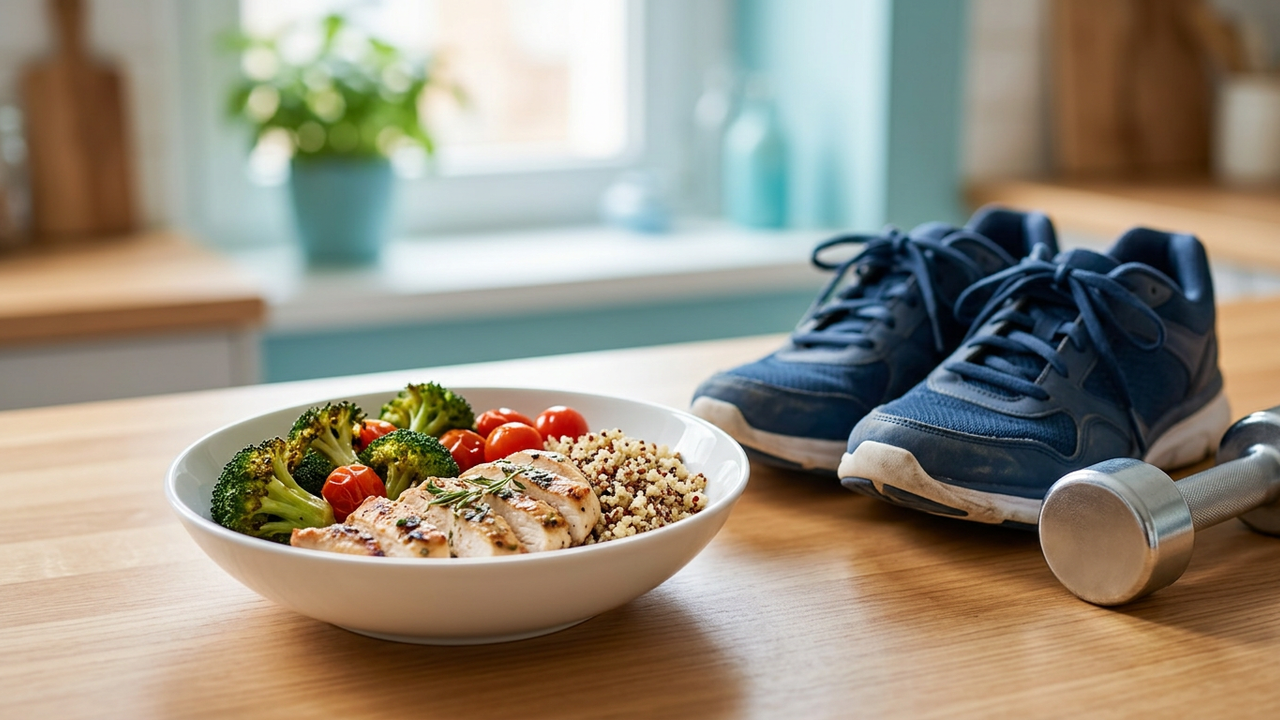
Weight-Loss Injections Aren't Magic: Why Diet and Exercise Still Matter
Updated: Oct 10
If you've read anything about weight-loss jabs like semaglutide (Wegovy) or tirzepatide (Mounjaro), you might think they do all the work on their own. You have an injection once a week, and the weight comes off. Easy, right?
Not quite. New research from 2026 shows that people who take these medicines without also changing how they eat and move often get worse results — and can even lose muscle instead of just fat. The NHS and UK doctors are clear: these medicines are meant to work alongside lifestyle changes, not instead of them.
What these medicines actually do
GLP-1 medicines copy a hormone your gut makes naturally. They make you feel full sooner, slow down digestion, and quieten the part of your brain that nags you to think about food all the time. This is genuinely helpful. But it doesn't automatically make you eat well-balanced meals, get enough protein, or move your body. Those things are still down to you — ideally with support.
The NHS says: medicine plus support, not medicine alone
In the UK, weight-loss injections prescribed through the NHS come as part of a package, not a lone prescription. NHS England is clear that people taking tirzepatide need to "eat a balanced, reduced calorie diet and take part in physical activity regularly," and the medicine is only available through specialist weight management services where dietitians and psychologists help patients build those habits. For semaglutide, doctors are told to recommend it when diet and exercise changes alone "have not worked" — meaning lifestyle changes come first, with medicine added on top, not swapped in instead.
A surprising 2026 finding: people often move less on these medicines
You might expect that losing weight makes people want to move more. A 2026 US study presented at the Endocrine Society's annual conference found the opposite. Researchers looked at Fitbit data from 753 adults who started GLP-1 medicines. On average, daily steps dropped from about 5,047 to 4,487, and moderate-to-vigorous exercise fell from 28 to 22 minutes a day. The drop was biggest in men and in people with joint or muscle pain. Lead researcher Dr Sajana Maharjan put it simply: "Exercise cannot be optional for people taking these medications." Feeling less hungry and lighter doesn't automatically switch on motivation to exercise — if anything, it can go the other way.
Protect your muscles, not just the number on the scale
Roughly a quarter of the weight people lose on these medicines is muscle and other lean tissue, not fat, according to a detailed 2026 review of the research. Losing some muscle is expected with any weight loss, but losing too much can leave you weaker, slow your metabolism, and make it harder to keep weight off long-term.
The same review found two things help protect muscle:
Protein. Aim for roughly 1.2 to 1.5 grams of protein per kilogram of your body weight each day, spread across your meals rather than saved for one big dinner. Most people on these medicines don't hit this target, partly because appetite is so much smaller — so it helps to prioritise protein-rich food first on your plate.
Strength training. Doing resistance exercise — using weights, resistance bands, or your own bodyweight — two to three times a week, working the major muscle groups, made a real difference in trials. Walking and cardio are great for your heart and mood, but on their own they don't protect muscle the way strength training does.
The support gap
A 2026 project from Coventry University, working with NHS-linked weight management services, highlighted a problem: most people using these medicines get little or no behavioural support to help with exercise, diet, sleep or confidence — even though the World Health Organization recommends pairing the medicines with exactly this kind of support for lasting results. Course director Dr Nikita Rowley noted that habits like "moving more, eating better and improving sleep are essential for sustaining weight loss once the drugs stop."
The bottom line
Weight-loss medicines can be a genuinely useful tool, but they work best as part of a plan that includes eating well, regular movement (especially strength work), and good sleep — ideally with proper support around you. These are prescription-only medicines that need a full assessment by a qualified clinician, who can check whether they're appropriate for you and help make sure you're supported to build the habits that make the results last.
Thinking about weight-loss treatment?
Find out in 2 minutes whether our programme is right for you. There's no charge if you're not eligible.


Comments